Read the setting before choosing the details
Look at the architecture, planting, water and existing colours. A garden terrace and a richly decorated interior offer different starting points. Decide what you want to celebrate in the setting and where you want the design to introduce something new.
Gather a small selection of references and explain what attracts you to each. It may be the looseness of the flowers, the warmth of the light or the shape of the table, rather than the entire image. That gives your design team a clearer brief than a large folder of unrelated photographs.
Give colour a clear role
Consider how the palette will appear from the ceremony through dinner and into the evening. Linen, stationery, flowers and lighting all contribute. Matching every object exactly is not the only way to create a coherent atmosphere; texture and proportion can connect different tones.
Think about the setting at the time guests will use it. A colour chosen in daylight may feel different beneath interior lighting. Review key materials together where possible and ask how the florist will interpret the palette with flowers suitable for your date.
Place the emphasis where it matters
Choose the moments that deserve the strongest visual focus. The ceremony, the arrival at dinner or a particular shared table may be central to your vision. Other areas can be quieter while still feeling considered.
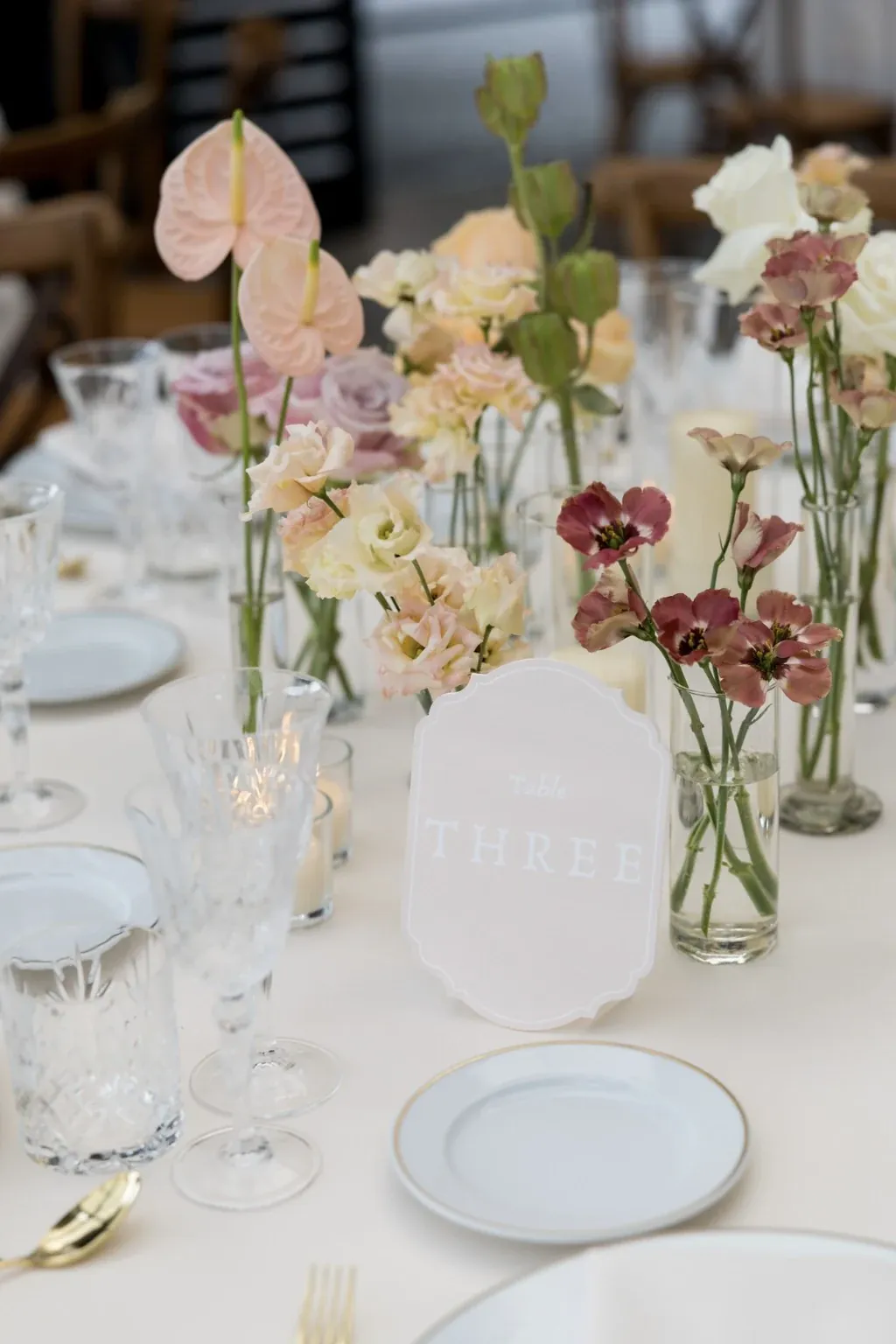
Discuss scale with the people who will use the space. Guests need to see one another, staff need room to serve and musicians need a workable position. A table arrangement should be assessed with the actual place settings, glassware and service style, not only as an isolated floral composition.
Bring lighting and production into the design
Lighting changes how guests experience the setting after dark. Consider the entrance, dinner, speeches, dancing and paths between spaces. Ask the team to connect those practical needs with the atmosphere you want, including the venue’s restrictions and power arrangements.
If you love suspended flowers or a structure, discuss feasibility before treating the reference as a confirmed design. Installation, permitted attachment points and access require agreement with the venue and suppliers. Any move or reuse of flowers should also be planned around timing and condition.
Make the design personal
A favourite colour, a meaningful pattern or a reference to your lives can be enough to make the celebration feel yours. Personal detail does not need to appear everywhere to be noticed. Give it a place where guests can appreciate it.
At Boutique Weddings, we connect those ideas with the setting and the production needed to bring them to life. Explore our real weddings for different approaches, then tell us what draws you in. The aim is a design that belongs to your celebration rather than a recreation of somebody else’s.